
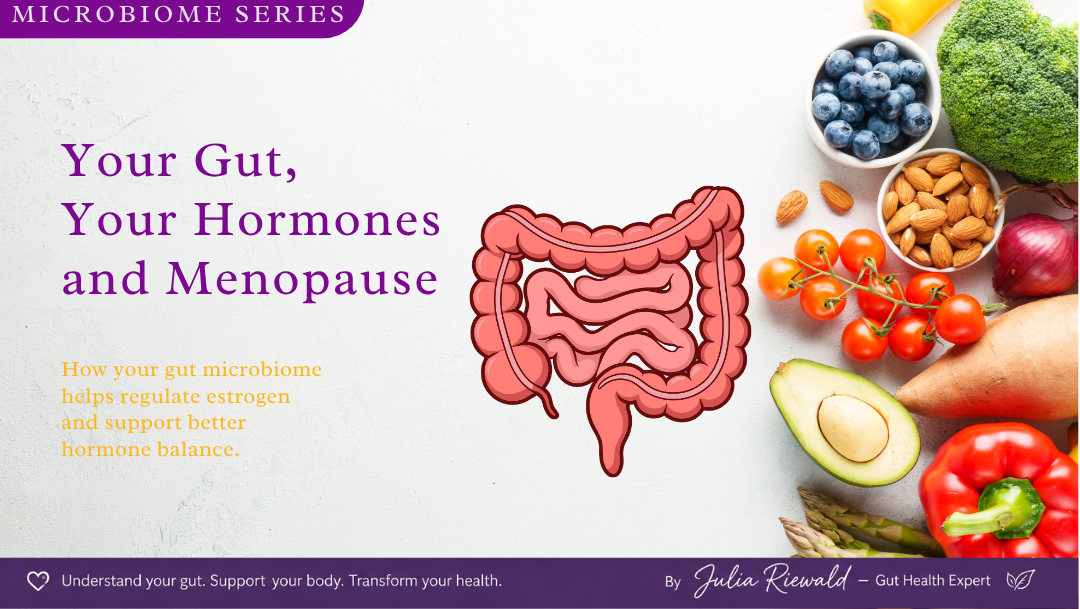
Your Gut, Your Hormones and Menopause
When we think about menopause, we naturally think about hormones.
But how often do we think about our gut at the same time?
The two are more closely connected than you might imagine.
Meet Your Microbiome
Your digestive system contains a vast ecosystem of microorganisms collectively known as your gut microbiome.
These microorganisms don’t simply sit there waiting for your next meal.
They participate in processes throughout your body — including processes connected with hormone metabolism.
Julia’s menopause material highlights the microbiome’s role in regulating estrogen levels through its influence on estrogen metabolism.
This becomes particularly interesting during perimenopause and menopause, when estrogen levels are already changing.
Your Gut Is Part of a Bigger System
One of the things I want women to understand is that our bodies don’t operate as a collection of completely separate parts.
Your digestive health isn’t simply about whether you’re bloated or constipated.
Your hormones aren’t operating in isolation.
Your brain isn’t separate from your gut.
Everything communicates.
This is why looking after yourself during midlife needs to involve more than focusing on one symptom at a time.
Nourish Rather Than Punish
Midlife is often when women become frustrated with their bodies.
We gain weight differently. Our energy changes. Sleep can become more difficult. Our moods can fluctuate.
The temptation is to start restricting food, following another diet or blaming ourselves.
I’d rather encourage you to become curious.
What are you feeding your body?
Are you giving your beneficial gut bacteria the foods they need?
Are you drinking enough water?
Are you moving?
Are you constantly stressed?
Understanding these connections allows you to start making choices from a position of knowledge rather than frustration.
Your changing body isn’t something to fight.
Learn about it. Nourish it. Work with it.
Next: Why Your Gut and Brain Are Constantly Talking.
Other articles you might be interested in
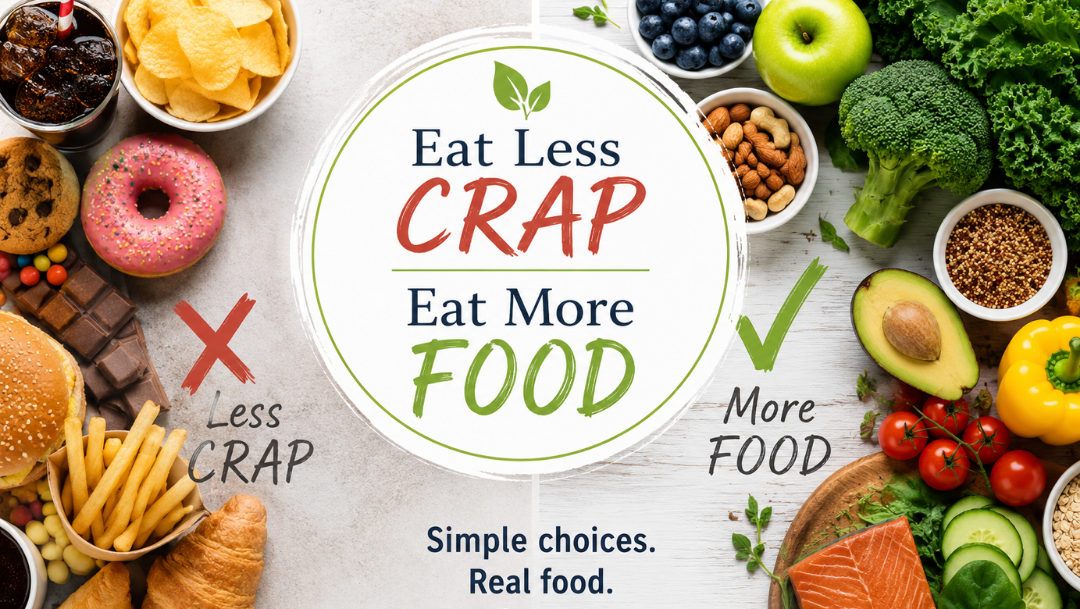
Eat Less Crap

How do you feel about You?
